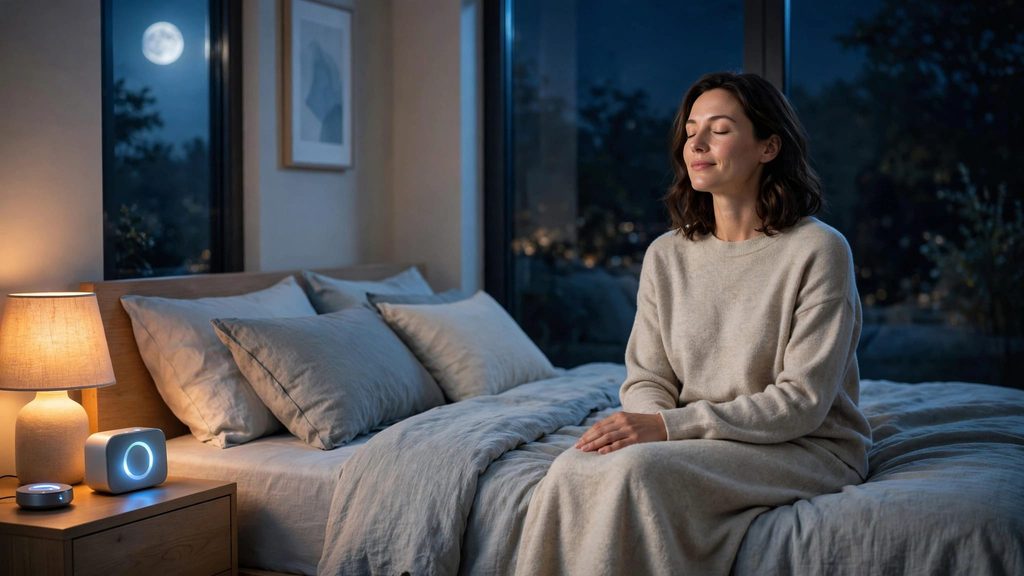
A woman practises slow breathing beside a bed, with a sensor and glowing monitor nearby.

Biofeedback for Insomnia: How Relaxation Training Works

Biofeedback uses real-time body measurements to teach relaxation skills that may make sleep easier. Neurofeedback for insomnia uses brain-activity feedback instead. It’s non-invasive and medication-free, but evidence for treating persistent insomnia remains limited. If you feel exhausted yet wide awake, reducing arousal may help. However, relaxation doesn’t address every cause of poor sleep, and cognitive

Biofeedback for Insomnia: How Relaxation Training Works Read More »

A phone and headphones sit beside a neatly made bed under warm lamp and moonlight.

Relaxing Music for Insomnia: Build a Sleep Playlist

Relaxing music for insomnia may improve how you rate your sleep, but it isn’t an established cure. A simple playlist can make winding down feel easier without adding another medicine or supplement. If bedtime brings racing thoughts, gentle music offers something less demanding to focus on. The goal is less pressure around sleep, rather than

Relaxing Music for Insomnia: Build a Sleep Playlist Read More »

A woman relaxes on a bed beside a lamp and sound machine.

Can Tinnitus Make Insomnia Worse? A Calmer Night Plan

Yes, tinnitus can make insomnia worse by drawing your attention to ringing or buzzing when you’re trying to sleep. Poor sleep can then increase distress and make tinnitus feel more intrusive, creating a cycle of nighttime alertness. You don’t have to silence tinnitus completely before rest becomes possible. Start with gentle background sound, a predictable

Can Tinnitus Make Insomnia Worse? A Calmer Night Plan Read More »

A neatly made bed beside a warm lamp, an open book, and a turned-away alarm clock.

Bedtime Procrastination: A Practical Routine Reset

Bedtime procrastination means putting off bed when nothing prevents you from going, despite knowing tomorrow will feel harder. Changing that pattern starts with making the evening easier to finish, while recognising that difficulty sleeping needs a different response. If you’re delaying bedtime because lying awake feels miserable, stricter rules may add pressure. Start by separating

Bedtime Procrastination: A Practical Routine Reset Read More »

An unmade bed and open journal sit beneath a warm lamp, with the moon outside the window.

ACT for Insomnia: A Practical Guide to Less Sleep Anxiety

ACT for insomnia is acceptance and commitment therapy applied to chronic insomnia. This evidence-based psychological approach changes how you respond to wakefulness instead of trying to force sleep. It helps you meet uncomfortable thoughts and feelings with less struggle, while rebuilding a life that isn’t organised around sleep. If bedtime has become a performance test,

ACT for Insomnia: A Practical Guide to Less Sleep Anxiety Read More »

A woman relaxes on her bed beside a lamp, journal, and cup of tea.

Self-Hypnosis for Insomnia: A Simple Bedtime Practice

A practice of self-hypnosis for sleep offers a gentler way to settle your attention and release tension. It can reduce the pressure surrounding bedtime. It may help some people, but it isn’t a guaranteed sleep treatment. The aim is less struggle, rather than falling asleep on command. Start with a comfortable routine that leaves room

Self-Hypnosis for Insomnia: A Simple Bedtime Practice Read More »

Scroll to Top
Copied!